
Overcrowding, unsanitary conditions in Asia's largest slum pose big challenges to containment.

News viewership was the biggest gainer during the first full week of lockdown, growing 298 per cent versus the pre-COVID period between January 11 and 31. Ramayana, whose rerun has begun on Doordarshan, was the top-rated show on Saturday and Sunday.

Cancellation of at least Rs 3,000-crore worth of business has happened in the past few weeks.
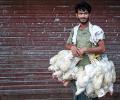
Weak demand from the poultry sector has resulted in a sharp decline in feed prices too, with both soybean and maize prices falling by nearly 25 per cent in the past two months. The poultry market consumes around half of soybean and maize production in India.

'There is a clear business impact. People are avoiding crowded places and gatherings across cities. This is hitting business, both at traditional and modern trade outlets, during the Holi season, which kicked off from Saturday,' says Praveen Khandelwal, general secretary, Confederation of All India Traders (CAIT).
Across the country, companies have stepped up their act to contain the crisis. IT and other new economy firms seem to have taken a lead.

RIL's stake in Network18 would reduce to 64 per cent, from 75%, following the merger
The first to see price hikes will be soaps. In the past six months, domestic palm oil prices have increased by 46 per cent. Palm oil is a key input going into soaps.

In his book, Backstage: The Story Behind India's High Growth Years, Montek Singh Ahluwalia accepted the Act "increased the cost of land to financially unsustainable levels ... and made it easier for anyone who wants to stop a project to use the various consultative processes required under the law to delay matters".

Experts feel that mall owners anticipate an increase in costs to the tune of 15-20 per cent annually, prompting a mixed response to the '24 hours' initiative. A mall owner said while the policy is good in spirit, implementing it would be a challenge as night shopping or eating out wasn't a habit in Mumbai yet.

'As long as people are eating we will be there,' Rebel Foods CEO Jaydeep Barman tells Viveat Susan Pinto and Niraj Bhatt.

While Unilever has been aggressive, both organically and inorganically in the country, P&G's approach has been about achieving 'balanced growth' in terms of top line and bottom line.

Sinha, who had both agency and client experience having worked at Coca-Cola in the 1970s and early 1980s, was the first woman to set up a national advertising agency. While Tara Sinha Associates was launched in 1985, Clarion was launched way back in 1955 at the start of her career.

With founder Subhash Chandra no longer in the driver's seat at Zee, the acid test for Punit Goenka would be to take the financial investors along with him even as he strives to weather the latest storm. The question, now, is how he will deal with the challenges of being a professional CEO rather than an owner-CEO in the aftermath of his family offloading most of its promoter stake to a clutch of financial investors. However, the silver lining is that Zee remains the most profitable of the top four broadcasters in India.

The store segmentation approach that Shoppers Stop is taking is intended to improve its hit rate at a time when local and international fashion retailers are crowding the market with new merchandise across price points.

Chandra, who will turn 69 years old on Saturday, becomes non-executive director with immediate effect.

Apart from a stake buy, some other options on the table include a merger of the entertainment businesses of Sony and Network18 Media.


Within rural markets, the viewership share of Dangal TV, which is a free-to-air channel, is at 33%.

Companies whose products have not been picked up for distribution in Gujarat under a "non-cooperation movement" include Marico, Dabur, Emami, Britannia, Reckitt Benckiser, and Godrej Consumer Products.
 © 2026 Rediff.com - Advertise with us - Disclaimer - Privacy Policy - Sitemap - Feedback - About us - Terms of use - Grievances